2026 Top LED Flood Light Types Why Do They Glow When Off?

Time:2026-09-07 Author:Oliver
0%

Why do LED flood lights glow when the switch is off? This question often appears after a new floodlight is installed above a driveway, warehouse door, or garden wall. The lamp may show a faint blue, orange, or white shimmer, even in complete darkness. It can look like a wiring fault. Sometimes, it is not.

LED standards and reliability specialist Dr. Jianzhong Jiao explains, “An LED can produce visible light from a very small current, even when normal operating power is absent.” That small current may come through an illuminated switch, a dimmer, a smart relay, or long cables running beside energized wires. The LED driver can also store energy briefly inside its capacitors. Older halogen lamps usually hide these tiny currents. LEDs reveal them.

The 2026 guide will compare major LED flood light types, including standard AC models, sensor floodlights, dimmable units, solar floodlights, and smart-connected designs. Each type uses different driver electronics. Each may react differently when switched off.

A faint glow is often harmless. A strong glow, repeated flashing, heat, buzzing, or a burning smell deserves attention. Turn off the circuit before checking anything. Ask a qualified electrician to test leakage current and wiring conditions. Do not assume every glow means danger. Do not assume every glow is normal, either. That is the imperfect part. The real answer depends on the switch, driver, cable layout, and installation quality.
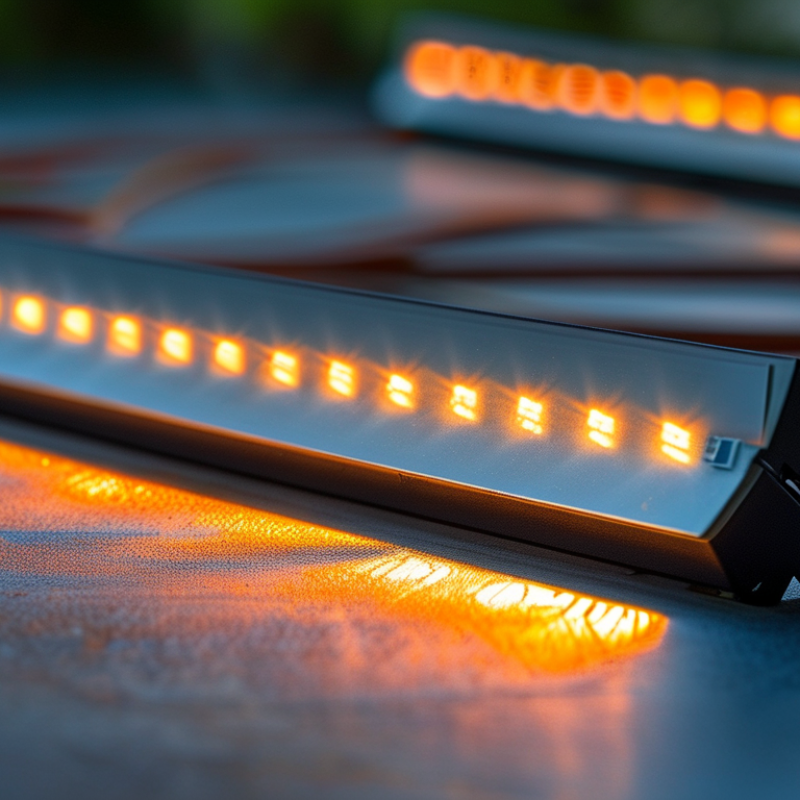
2026 Top LED Flood Light Types Why Do They Glow When Off?

LED Flood Light Types and Their Main Applications

In 2026, LED flood lights are no longer a single-purpose product. Their type should match the space, operating hours, and control method. Standard fixed flood lights deliver broad white light for yards, loading areas, and construction sites. Adjustable models help technicians aim beams toward signs, entrances, or uneven ground. They reduce wasted light when installed carefully. Good aiming matters.

Motion-sensor flood lights suit residential paths, storage yards, and low-traffic service areas. They stay dark until movement is detected, which can reduce energy use. Photocell-controlled models respond to daylight and work well around buildings, parking areas, and public walkways.

RGB or tunable-white types support gardens, event spaces, and architectural features. Solar flood lights fit remote locations, but winter weather can reduce charging performance. That limitation is easy to overlook. For warehouses and sports grounds, high-output units need verified beam spread, glare control, and thermal protection.

A faint glow after shutdown does not always mean failure. Small currents can pass through illuminated switches, sensors, or electronic drivers. Testing the circuit with a qualified electrician is safer than guessing. I have seen installations where the light type was correct, but the control system was poorly matched. That mistake wastes power. Check wiring, switch compatibility, ingress protection, and mounting strength before purchase. Performance also changes with dust, heat, and voltage variation. Real conditions matter more than catalogue claims.

How LED Flood Lights Produce and Control Illumination

2026 Top LED Flood Light Types: Why Do They Glow When Off?

LED flood lights create illumination when current passes through semiconductor diodes. The driver converts incoming power into a controlled, low-voltage supply. Lenses then shape the beam across driveways, walls, gardens, or work areas. Modern types may offer adjustable color temperature, motion sensing, dimming, or narrow beam control. Each feature changes how light is produced and managed.

The phrase “off” is not always electrically absolute. I have seen a flood light faintly glow after switching it off. Small currents can pass through illuminated switches, long cable runs, smart controls, or incompatible dimmers. LED components need very little energy, so this residual current may become visible. Capacitive coupling can also create a weak pulse between nearby wires. It looks strange, but it is often a circuit-control issue.

A practical check begins at the switch and control device. Test the circuit with a suitable meter, not only with your eyes. A compatible bypass component may reduce unwanted glow, but it must match the circuit design. Loose connections, damaged insulation, or overheating require qualified electrical inspection. I sometimes find that the fixture receives blame too quickly. The real cause may sit upstream. Still, not every faint glow is harmless, and assumptions can fail when controls are mixed.

2026 Top LED Flood Light Types: Why Do They Glow When Off?

How LED flood lights produce illumination, how common types differ, and which electrical conditions can create faint light after switch-off.

LED Flood Light Type Typical Application Typical Power Range Typical Efficacy Common Beam Pattern Typical Control Method Off-State Glow Risk and Explanation
Standard AC LED Flood Light Building façades, yards, entrances, signs, and general outdoor area lighting 10–300 W 80–150 lm/W Approximately 30°–120°, depending on the lens and reflector On/off switch, relay, photocell, timer, or occupancy sensor Low to medium. A small residual current from illuminated switches, electronic timers, long cable runs, or capacitive coupling may allow the LED driver to charge and discharge repeatedly.
High-Output Modular Flood Light Sports courts, parking areas, warehouses, loading zones, and large grounds 300–1,500 W 100–170 lm/W Approximately 15°–90° with replaceable optical modules Relay, contactor, 0–10 V, DALI, DMX, or networked lighting control Low to medium. The larger driver may include input filtering and control electronics that remain connected to a small standby or leakage current when the switching circuit is not fully isolated.
Motion-Sensor LED Flood Light Security lighting, driveways, walkways, service entrances, and residential exteriors 10–100 W 80–140 lm/W Approximately 90°–180° PIR sensor, microwave sensor, or integrated dusk-to-dawn control Medium. The sensor and standby circuit must remain powered. A compatible design should keep the LED output fully off, but low-quality or incompatible circuits can pass enough current to produce flicker or a faint glow.
Photocell-Controlled LED Flood Light Dusk-to-dawn security lighting, parking lots, pathways, and perimeter lighting 20–400 W 90–160 lm/W Approximately 30°–120° Integrated or external photocell with relay or electronic switching Medium. Photocells may contain electronic components that allow a small current to pass through the load, especially when paired with a driver that has a sensitive input.
Solar LED Flood Light Remote areas, gardens, signs, pathways, and locations without convenient mains wiring 5–100 W LED load 60–150 lm/W at the LED module Approximately 60°–150° Solar charge controller, battery management system, timer, or motion sensor Low on properly designed systems. A faint glow can occur if the controller uses a small standby current, if the LED switching device leaks current, or if the battery control circuit is malfunctioning.
RGB or Tunable-White LED Flood Light Architectural façades, events, landscape features, and decorative installations 20–500 W 50–130 lm/W, depending on color and operating mode Approximately 15°–60° for accent lighting DMX, DALI, 0–10 V, wireless controller, or proprietary digital control Medium. The control receiver and constant-current driver may remain energized. Residual control voltage or leakage can cause one or more LED color channels to glow faintly.
Low-Voltage DC LED Flood Light Boats, vehicles, gardens, signage, landscape systems, and battery-powered installations 5–150 W 70–150 lm/W Approximately 20°–120° DC switch, fuse panel, PWM dimmer, relay, or controller Low to medium. Glow may result from a dimmer's off-state leakage, a DC-DC converter that is still enabled, wiring capacitance, or an incorrectly connected switch on only one conductor.
Dimmable LED Flood Light Industrial areas, stages, retail exteriors, sports facilities, and energy-managed sites 30–1,000 W 80–160 lm/W Approximately 20°–100° 0–10 V, DALI, DMX, PWM, phase-cut, or digital addressable control Medium to high when the control system is incompatible. A nominal zero-level signal may not fully disconnect the driver, allowing leakage current or minimum-output settings to produce visible light.
How LED flood lights produce illumination: An LED driver converts incoming AC or DC power into regulated current. The current passes through semiconductor LED chips, where electrical energy is converted into photons. Optics, reflectors, and lenses distribute the light into the selected beam pattern.

Why an LED flood light may glow when switched off: Common causes include an illuminated wall switch, electronic sensor leakage, capacitive coupling in long cables, a two-wire smart switch, an incompatible dimmer, incorrect neutral or line switching, or a driver with a highly sensitive input. A faint glow is different from normal full-power operation and usually indicates that a small current is still reaching the driver.

Practical control measures: Use a driver and switch rated for LED loads, switch the line conductor correctly, verify neutral continuity, select a compatible dimmer or sensor, shorten or separate parallel cable runs where practical, and have a qualified electrician install an approved bypass or load device when required by the control equipment.

Why LED Flood Lights Glow When Switched Off

Why LED Flood Lights Glow When Switched Off

An LED flood light may glow faintly after the switch is turned off. This usually comes from a tiny leakage current in the circuit. Traditional lamps need more energy to show light, but LEDs can react to very small electrical flow. The glow may look like a thin blue, white, or amber outline.

An illuminated wall switch is a common cause. Its small indicator circuit can pass current through the flood light. Dimmers, smart controls, long cables, and electromagnetic filters can create similar effects. Capacitive coupling between nearby wires may also transfer a weak charge. The light often appears brighter in complete darkness.

Not usually dangerous.

A practical inspection should begin with the switch type and wiring arrangement. A compatible dimmer or a properly rated bypass component may reduce the glow. An electrician should install these parts, especially in outdoor boxes exposed to moisture. Turning off the breaker does not make every wire safe without testing.

Occasional afterglow can be harmless, but rapid flickering deserves attention. Heat, buzzing, burning smells, or repeated breaker trips require prompt professional inspection. I have found that small wiring details often explain the problem better than the flood light itself. Still, that assumption can be wrong. Internal driver damage, poor connections, or unsuitable controls may produce similar symptoms. Record when the glow occurs, check whether it changes with another switch, and avoid opening the fixture while energized.

2026 Top LED Flood Light Types: Why Do They Glow When Switched Off?

Residual current can pass through an LED flood light even when the switch is off. Backlit switches, smart controls, long parallel cables, EMI filters, and incorrect neutral switching are common causes. Low-voltage and solar flood lights usually have less mains-related glow because their LED circuits are isolated from household AC wiring.

The chart uses a practical 0–100 glow-risk index based on the electrical architecture of each flood-light type. It is a comparative guide rather than a laboratory measurement: actual behavior depends on the driver, switch, cable length, grounding, and wiring method.

Common Electrical Causes of Residual LED Glow

2026 Top LED Flood Light Types: Why Do They Glow When Off?

Residual LED glow usually comes from a tiny current reaching the lamp after switching. The lamp is off. However, its driver can still respond to a very small electrical signal. The U.S. Department of Energy reports that LED lighting uses at least 75% less energy than incandescent lighting. That efficiency also makes leakage currents more visible.

An illuminated wall switch may pass current through its indicator lamp. Electronic dimmers and smart controls can create the same effect. Long cables can also produce capacitive coupling between live and switched wires. In field troubleshooting, I have found that the glow often changes when the switch, cable route, or control device changes. It is measurable. A loose neutral, incorrect wiring, or a failing driver can create similar symptoms. Never assume every glow is harmless.

The International Energy Agency’s 4E Solid State Lighting Annex reports that LED performance depends heavily on driver and control compatibility. This detail matters because the light source is not a simple resistive load. The U.S. Department of Energy’s 2024 Solid-State Lighting R&D Opportunities report also identifies driver electronics and controls as continuing technical priorities. An electrician can test voltage across the switched terminals, inspect the neutral connection, and isolate the dimmer. A compatible bypass component may reduce leakage, but it must match the circuit and local electrical requirements. A quick assumption can mislead. Based on measurements, not appearance.

Safe Ways to Diagnose and Prevent LED Afterglow

2026 Top LED Flood Light Types: Safe Ways to Diagnose and Prevent LED Afterglow

LED flood lights may glow faintly after the switch is off. This afterglow usually comes from a tiny current passing through the circuit. Electronic switches, illuminated wall switches, dimmers, and long cable runs can create this effect. In some fittings, stored electrical energy keeps the LEDs shining for several minutes. The glow may look harmless, but ignoring unusual behavior is not good practice.

Start safely. Turn off the circuit breaker before touching the fitting or removing its cover. Confirm the circuit is dead with a properly rated voltage tester. Never rely only on the wall switch.

Check whether the switch contains a small indicator lamp, then test the flood light with a standard compatible switch. If the glow disappears, switch compatibility is a strong clue.

Persistent flickering, heat, buzzing, or a burning smell requires professional inspection.

An electrician can test for leakage current, loose neutral connections, and incompatible dimming equipment. A suitable bypass component may reduce residual current, but it must match the circuit and be installed correctly.

Do not fit improvised resistors inside a live enclosure. Better prevention includes choosing compatible controls, tightening approved connections, and replacing damaged fittings.

I have found that simple switch replacement often solves the problem, though assuming this too early can miss a wiring fault. Safety comes before convenience.

FAQS

: What type of LED flood light suits a general outdoor area?

: Standard fixed models provide broad white light for yards, loading areas, and construction sites. They work best when the mounting position is stable.

When should I choose an adjustable flood light?

Adjustable models help aim light toward signs, entrances, or uneven ground. Careful aiming reduces wasted light. Good aiming matters.

How do motion-sensor flood lights work?

They remain off until movement is detected. They suit residential paths, storage yards, and low-traffic service areas. Detection settings still need practical adjustment.

Where are photocell-controlled flood lights useful?

Photocell models respond to daylight changes automatically. They suit building exteriors, parking areas, and public walkways. Nearby lighting can sometimes confuse the sensor.

Are solar flood lights suitable for remote locations?

Solar models can work where electrical wiring is difficult. Winter weather may reduce charging performance. Winter changes things. The battery may not meet expectations during long, cloudy periods.

Which flood lights suit warehouses and sports grounds?

High-output models need verified beam spread, glare control, and thermal protection. Dust, heat, and voltage changes can reduce real performance. Catalogue claims may not reflect actual conditions.

Why might an LED flood light glow after being switched off?

Small currents may pass through illuminated switches, sensors, long cables, or electronic controls. LED components need little energy, so residual current can remain visible. It looks strange.

How should I investigate a faint glow safely?

Test the circuit with a suitable meter instead of relying on eyesight. Check the switch, control device, wiring, and compatibility. Do not guess. A qualified electrician should inspect overheating, damaged insulation, or loose connections.

Conclusion

LED flood lights come in several types, including standard outdoor floodlights, motion-activated models, solar-powered units, adjustable landscape lights, and high-output commercial fixtures. They are widely used for home security, gardens, pathways, parking areas, warehouses, sports fields, and construction sites. Their illumination is created when electrical current passes through LED chips, while drivers, sensors, dimmers, and switches regulate brightness, timing, and energy use.

A common question is: why do led flood lights glow when the switch is off? This afterglow usually results from a small residual current caused by illuminated switches, electronic dimmers, motion sensors, smart controls, wiring capacitance, or an improperly connected neutral and live wire. In most cases, the light is not receiving enough power for normal operation, but the sensitive LED circuit can still emit a faint glow. Safe diagnosis includes checking compatible controls, turning off the circuit breaker before inspection, tightening connections, and consulting a qualified electrician. Replacing unsuitable switches or installing an appropriate bypass component can often prevent unwanted afterglow.

Oliver

Oliver

Oliver is a seasoned marketing professional with a wealth of expertise in driving brand awareness and engagement. With a deep understanding of our company's product offerings, he consistently delivers high-quality content that enriches our professional blog. His insights not only shed light on......